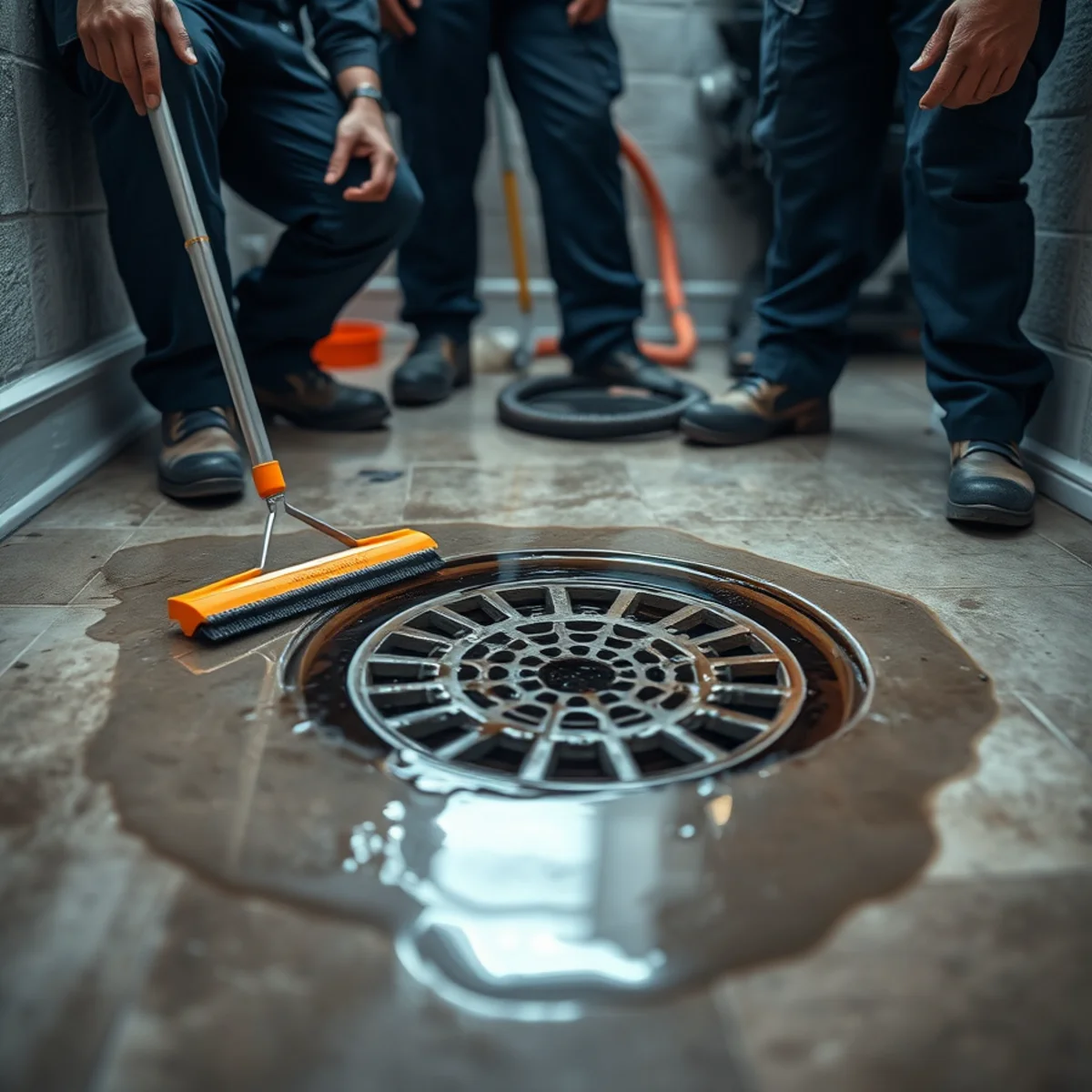
The rain comes down hard, and the drain in your basement floor starts to gurgle. Then dirty water wells up around it and spreads across the slab.
It is one of the more alarming things a homeowner can walk into. It is also a clear signal. That floor drain is the lowest opening in your home's plumbing, so when something downstream backs up, this is where it shows first.
Here is why it happens in the Mohawk Valley, what to do in the moment, and how to keep it from repeating.
Why the floor drain overflows first
Water finds the lowest exit. Your basement floor drain sits at the bottom of the whole system.
When your sewer line or the municipal main cannot carry the flow, the backup rises up the pipe and pushes out the lowest opening it can find. In most homes, that is the floor drain — sometimes a basement toilet or a laundry standpipe joins in.
So the floor drain backing up is rarely a floor drain problem. It is a downstream problem announcing itself.
The real causes behind a storm backup
A clog in your main sewer line
If your main line is already partly blocked with grease, debris, or scale, it has no spare capacity. A normal day might drain fine. Add the surge of a heavy rain and the line tips over into a backup.
A partial main-line clog is the most common reason a single home floods while the neighbors stay dry.
Tree roots in the lateral
Roots are drawn to the water and nutrients in a sewer lateral. They creep in at joints and cracks, then grow into a mat that catches everything flushing past.
Older neighborhoods around Herkimer and Frankfort have mature trees and aging clay or cast iron laterals — a combination that practically invites root intrusion. During a storm, a root-choked line clogs the rest of the way and backs up.
An overwhelmed municipal sewer
Some older systems combine storm runoff and sewage in the same pipes. In a downpour, that shared main can fill faster than it drains.
When the public main surcharges, the backup can push toward every home connected to it — and again, your floor drain is where it surfaces. This is not your pipe failing. It is the street's pipe running out of room, and it points to a specific fix we will get to.
High groundwater and spring thaw
Our worst backups do not always come from summer storms. They come in spring.
Snowmelt plus rain plus already-saturated, frozen-then-thawing ground drives the water table up hard. Groundwater seeps into sewer lines through every crack, filling pipes that would otherwise handle the day. The ground here can stay saturated for weeks during the thaw, which is why March and April are prime backup season.
A failed or missing sump pump
If your basement relies on a sump pump to manage groundwater and it fails — or the power goes out in the same storm that is driving the water up — the water has nowhere to go but up through the floor.
A dead sump during a heavy rain is one of the fastest ways to flood a Mohawk Valley basement.
What to do right now
When the drain is actively backing up:
Stop using water immediately. No flushing, no laundry, no dishwasher. Every gallon you send down makes the backup worse.
Keep people and pets away from the water. A sewer backup is contaminated and a health hazard, not just a mess.
Move what you can off the floor — boxes, electronics, anything stored down there.
Do not pour drain chemicals down the floor drain. They will not clear a main-line clog and they make the standing water dangerous to handle.
Then call a plumber. If the water is spreading, the clock is running on your floors and belongings.
How to stop it from happening again
Once the immediate mess is handled, the goal is making sure the next storm is a non-event.
Clear and clean the main line
If a clog or roots caused the backup, the line needs to be cleared. For roots and heavy buildup, hydro jetting scours the pipe wall clean in a way a basic snake cannot — it cuts through the root mat and flushes out the grease and scale that were stealing your capacity. Routine drain cleaning keeps it that way.
A camera inspection at the same time tells us whether the line is simply dirty or actually damaged, so you are not guessing.
Install a backwater valve
A backwater valve is the real answer when the municipal main is the culprit. It is a one-way gate installed in your sewer line that lets your waste flow out but slams shut when water tries to flow back in from the street.
For homes on a combined or overloaded public sewer, it is the single most effective defense against a storm backup.
Get your sump pump right
If groundwater is the driver, a properly sized and maintained sump pump is your frontline. Our sump pump services cover sizing the pump to your basement, adding a battery backup so a storm-season outage does not become a flood, and testing the system before the wet season instead of during it.
A backup battery matters here. The storms that flood basements are the same storms that knock out the power.
Do not wait for the next storm
A basement floor drain backup is a warning. The line that failed this time will fail again, usually worse, and spring thaw comes every year.
We find out exactly why yours backed up — clog, roots, groundwater, or the municipal main — and we fix the cause, with honest pricing and your approval before we start. We are plumbers who also clean up the water, so we can stop the source and dry out the basement in one call.
If your floor drain is backing up, call Roto Drains at (207) 419-2600 any time, day or night. A real person will answer and help you get ahead of it.
Frequently Asked Questions
Why does my floor drain back up only when it rains?
Is a sewer backup in my basement dangerous?
Will a backwater valve stop my basement from flooding?
Written by the Roto Drains team — licensed & insured plumbers serving Herkimer & the Mohawk Valley, 24/7.
Roto Drains is a full-service plumbing, drain cleaning, water cleanup and restoration company. We specialize in emergency same-day service and can handle any job from a clogged toilet to a full sewer, water main, well, septic, cesspool replacement and everything in between. Open 24/7!